The 5 Best Books I Read in 2024 By Oliver DeMille
December 19th, 2024 // 5:06 am @ Oliver DeMille

They are all worth reading. In fact, it was very difficult to narrow it down to just 5. With that said, here they are, along with some thoughts on why each one is great, and tips on things to look for as you go. If any of them pique your interest, get them and read… Enjoy the list!
- Insidious by Orrin Woodward. This book is fantastic! A must read, and a runaway for the #1 top book of the year. In fact, it’s so great that I wrote an entire article and review just to talk about the super-important ideas in this one book.
| Tip: Go read my article about this book here. |
- Government Gangsters by Kash Patel. It’s deep, spot on, and incredibly relevant to our world today. Patel outlines what needs to happen to get our government back, specifically to size it down wisely and make it follow the Constitution once again. And he tells us what to do as well as the specifics of how to do it. Great book! Fabulous read, whether you agree with his recommendations or not.
| Tip: Pay special attention to everything he says about “fencing”. This alone is worth the price of the book. And after you study this, also research the word “impoundment” as it relates to the Federal Government. So important. Indeed, Fencing and Impoundment may be as important in our time as Checks and Balances were in the time of the American Framers. Not that they should be, but you want to know what they are and how they are used. |
- Jane Austen’s Little Book of Wisdom compiled by Andrea Kirk Assaf. This small book is pure fun! Every quote is worth deeply pondering. You’ll truly benefit from the witty and profound wisdom it contains. I loved it. Whether you want to be a better leader, spouse, dad, mom, student, sibling, boss, or employee, or just improve yourself and your effectiveness in relationships and life, this book is great reading on two levels—the wisdom of the words, and the beauty of how Austen uses the language. It will put a little more poetry and charm into your personality! Or just bring more smiles to your face in the year ahead. Super fun.
| Tip: Read and ponder one quote each day. At this pace it will last almost a year—and the year will undoubtedly be better! |
Continue Reading >>
Category : Blog &Book Reviews &Citizenship &Community &Culture &Current Events &Economics &Education &Featured &Generations &Government &History &Independents &Information Age &Leadership &Liberty &Politics &Postmodernism &Producers &Prosperity &Statesmanship &Technology
NEWS OF THE DAY by Oliver DeMille: Lessons from Crisis
April 6th, 2020 // 5:19 am @ Oliver DeMille
Lessons from Crisis
 The popular saying that “we shouldn’t let a good crisis go to waste” applies to the regular people and citizens, not just to politicians. In fact, politicians often use such thinking to make things worse.
But the regular people can do a lot of good during times of crises. In fact, they usually do.
Right now is no exception. There are a lot more people helping and serving others during this crisis than the media ever mentions. That’s a testament to good people. In addition, many people are doing another very interesting thing during this crisis, one that may last and impact our society for good long after the crisis passes. Specifically, people are realizing that the large majority of the news media isn’t handling crises very well–going as far as frequently omitting truth in reporting, and at times skewing or spinning the truth instead of just sharing the facts and trusting listeners to use their own brains.
The media has done this for a long time, but during crisis a lot more people are catching on–realizing that the media is frequently less than direct and truthful. It can be a benefit for our society, if people realize the media isn’t as truthful as the majority once believed. Gallup conducted a national U.S. poll in the last week of March 2020, and they asked people around the nation the following question:
“Do you approve or disapprove of the way each of the following is handling the response to the coronavirus in the U.S.?”
Americans ranked the media dead last of all the institutions listed. The approval rating for the news media was only 44 percent, while 55 percent disapproved. Compare this to 88 percent approval for hospitals, 83 percent for schools and daycare, 82 percent for “your state” and the same for “your employer”. Even political officials received higher-than-usual marks, with president Trump at 60 percent approval and Congress at 59 percent. The news media was the only institution that Americans rated underwater–with many more disapproving than approving.
Hopefully the crisis can have at least two silver linings concerning the future of media:
1) the media will get its act together and stop substituting agenda-driven spin for real journalism, and
2) the American people will remember to treat media reports with skepticism–and do their own research on the news that is important to them.
I’m not holding my breath for #1, but I think the crisis will likely convince a lot more people to wisely apply #2. Lessons learned in crisis can help us do better in the future.
Category : Blog &Business &Citizenship &Community &Culture &Current Events &Economics &Featured &Generations &Government &History &Independents &Information Age &Leadership &Politics &Service &Statesmanship &Technology
News of the Day: The Biggest Problem with Our Modern Politics
October 29th, 2019 // 2:20 pm @ Oliver DeMille
(and How to Fix It)
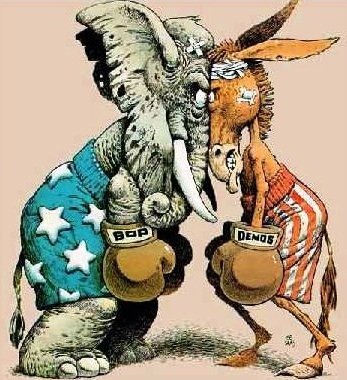 I just finished studying a fascinating book that really made me think: Passions & Politics by two European scholars, Paul Ginsborg and Sergio Labate. I found this a difficult book to read (dry and meandering), but it shares five very important ideas that deeply apply to all of us right now:
1. In modern politics, we are taught the importance of our political party winning elections, but not the duties and responsibilities we each have as citizens.
Concerning our duties, we are typically only taught the bare minimum: voting and jury duty. The rest is usually unspoken, and mostly ignored. Specifically, the great duties the American Founders gave to the citizens were twofold: (A) To keep a close eye on government, make sure it doesn’t step out of line (violate the constitution in any way, or exert any power not directly given by the constitution), and (B) think about what kind of nation and society we want to be, and spread this vision to everyone else. These are the two great duties of every citizen in a free nation. Yet today they are both largely forgotten.
2. The political debate today is mostly about the choice between two candidates, or two parties. It is hardly ever about what kind of society or nation we want to have. As a result, most political discussion now is dogma, not wisdom.
We seldom even think about wisdom when politics comes up. Almost everyone is a dogmatic partisan now, not a wise citizen. Passions & Politics points out that our partisan emotions usually push us toward angry utopian daydreams or blunt, angry “isms”, and both tend to be a bit shallow.
3. “…for decades the political parties were ‘modern princes’, today they are no longer up to the task.”*
If our political parties run our nation (and they do), but they aren’t “up to the task” anymore, we are in a bad situation. Something has to change. Either the parties need to come together, get their act together, and create a whole new way of working with each other, or we need a new system not mired in party hatred and party conflicts. Both of these alternatives seem unlikely, unless something drastic occurs.
4. Our politics are now stuck in, “Resentment, competition, a blind conviction that the only way to build a community is to build up some enemy to serve as the target of hate.”
This is true for both sides, the left and the right. Parties now typically spend more effort and time trying to tear down the other side than working toward any great and important goals for our nation and society. Like a very bad divorce, the full focus is on bringing each other down, not helping anyone or improving the nation in any serious way. This can only lead us in one direction—down. No matter who the voters elect, this war between the parties keeps hurting our nation, distracting our leaders and officials from their real work for the people.
5. What our politics need right now is mostly calm, useful wisdom, but we seldom listen to this voice in the modern environment of fearful, angry politics.
Our politics have become almost entirely about “our side winning”, in order to avoid the terrible results of losing to the despised “other side”. The biggest problem is that this fear is quite real. The “other” side will do things that drastically hurt us. For example, whatever side you take, the other side wants to use power to aggressively attack your wishes concerning abortion, family values and family rights, taxes, the environment, religious beliefs, guns, what our children are taught in the schools, immigration, health care, crime, jobs, and many other divided issues. It’s hard to be calm, or focus on wisdom, when the next election could mean a major loss of the freedoms you care about most. Both sides feel this way. And in the current system, both sides need to feel this way—because it’s generally true.
While Passions & Politics doesn’t outline any clear solutions, it does a good job of summarizing these serious problems of our time. To get real solutions, we’re going to have to think outside of the partisan box.
Solution: To begin with, at least a few citizens are going to have to step beyond the partisan wars and think wisely. Yes, the dangers of “the other side” will be screaming loudly in our ears every step of the way. But we need to do this anyway. We need to push partisanship aside a bit and focus on wisdom.
Both are necessary (winning the next election, and doing some serious thinking from a place of wisdom), but right now there are plenty of people engaged in the party battles. Hardly anyone is working on truly wise solutions to the current system.
Specifically, we’re never going to actually fix this overarching problem with our politics as long as we live under a system dominated by political partisanship. History is clear: party conflicts slowly get worse and worse over time, until they eventually escalate the infighting and destroy freedom. The American Founders didn’t like parties for this very reason; in Federalist 10, for example, Madison called parties the major roadblock to a free society. The Framers specifically didn’t write parties into the Constitution, and hoped this choice would get rid of them. It didn’t quite work, as we all know. Political parties are extremely tenacious.
But there is a solution. A real one. It’s not fast, but it works. The one proven way to reduce the power of parties is education—not the kind found in most schools (because political parties find too many ways to influence public education), but rather the kind of learning found in the home. Parents can drastically decrease the power of partisan influence on future voters, if they know this is needed.
Guess what?
It. Is. Needed.
Right now more than ever before in American history.
Parents have the power to solve this problem.
That’s the long-term solution.
We also need some more immediate solutions, things that will at least slow down the national decline caused by party extremism until the long-term solutions can make a difference. But whatever short-term solutions we come up with, they will all fail unless parents take on this vital project.
Please take action.
And please share this message far and wide.
To subscribe to News of the Day, click here >>
*All quotes in this review, and the 5 items listed and enumerated, are from Passions & Politics
Category : Aristocracy &Blog &Book Reviews &Citizenship &Community &Constitution &Culture &Current Events &Education &Family &Featured &Generations &Government &History &Independents &Information Age &Leadership &Liberty &Mini-Factories &Mission &Politics
News of the Day by Oliver DeMille
October 10th, 2019 // 6:30 am @ Oliver DeMille
It’s Getting Extreme Out There!
October 2019:
 The news is tumultuous these days. Growing threats of impeachment, allegations that the leading presidential candidate broke the law in the Ukraine and China for family gain, the current president accused of numerous mistakes, partisans pointing angry fingers at each other, gaggles of “experts” assuring us that one side or the other is all wrong, wars and rumors of wars. It never seems to let up. Each newscast, day after day, brings the “Breaking News”, which amounts to the latet and worsening allegations, “gotcha” politics, and promises of more to come.
But we shouldn’t be worried about this. Seriously. The news media today isn’t nearly as extreme as it was in the 1830s with its battles between Andrew Jackson and the National Bank. That was a time of major division, anger, and a lot of violence. The 1850s news media was even worse. And the media climate in the Boss Tweed period (1870s), the height of the Muckraker era (1905-1925), and the counter-culture wars of the 1960s were far more divided than anything we now experience. Today’s media extremes aren’t even as tumultuous or noisy as the Jefferson vs. Hamilton conflicts, which were immediately followed by the Jefferson vs. Adams battles. Yes, today’s news is intense, partisan, and adversarial—but nothing as bad as these other times in American history.
We do tend to feel more upset by media extremism today than in the past, partly because television and other audio-visual media are more emotionally engaging than reading things in hard print, but mainly because during the relatively peaceful era between 1970 and 2014 most Americans came to believe in, and trust, the stated ideals of “modern objective journalism”. We bought into media and government as credible sources of true information. In 1973, for example, 42% of Americans had high confidence in Congress (today it’s 11%), and 46% had high confidence in television news (today it’s only 18%). But the era of objective journalism is now largely past, replaced by a return to the kind of turbulent, extremist, and intemperate news media that has been the norm in most free nations through history.
Scientist Carl Sagan described this when he wrote: “The dumbing down of American is most evident in the slow decay of substantive content in the enormously influential media, the 30 second sound bites [now down to 10 seconds or less]…but especially a kind of celebration of ignorance.”Jim Morrison warned: “Whoever controls the media, controls the mind.”
But it turns out that Morrison was wrong on this point. The reality is that in most eras of media peace and quiet politics, freedom quickly declines. When the people are actively battling for their freedoms, politics is full of turmoil and political parties threaten each other with allegations, exaggerations, lies, and name-calling. In a free society, the masses want their government to be peaceful, quietly handling business, and their media professional, trusted, and smilingly civil. But in such times, freedom tends to be attacked and reduced behind the scenes.
In response, the people take notice, and (hopefully) push back—when they do, the politics and media heat up. Historical truth: If there isn’t commotion in politics, the people are losing ground. To get back their freedoms, and their control over the well-funded plans and agendas of elites, turbulence and uproar are needed. Madison told us that the American system was purposely designed so that such uproars would focus on elections, not violent revolutions. Good news: it’s working.
Part of this is easy to keep track of. When the media is polished, quiet, seemingly objective, and widely trusted, the people usually let politicians increase power (and decrease freedoms). In turbulent times like ours, the people see the media for what it is—mostly a propaganda arm of elite power. When the people don’t trust the media, freedom is in better shape than when the people just believe the news. Freedom thrives when the people don’t trust media, or politicians. When they keep a close eye on everything done by government, corporations, media, and elites. Such times are naturally more noisy, chaotic, and confusing. Which is precisely the reason the people pay attention. We are living right now in just such a time. Consider the approval rating* of the following major American institutions right now:
Very High
None
High
The Military 73%
Small Business 68%
Medium
Police 53%
The Presidency 38%
Supreme Court: 38%
The Medical System 36%
Organized Religion/Church 36%
Low
Banks 30%
Public Schools 29%
Very Low
Big Business 23%
Newspapers 23%
Television News 18%
Congress 11%
The fact that the nightly news and Congress suffer such low confidence from the American people tells us that we’re in a better place than most people think. Specifically: The people are watching, and they aren’t buying what Congress and the media are promoting. They just don’t trust these institutions. Only 18% and 11% confidence? Seriously? Of course, guess who tells us the opposite? The media. They’re trying to justify their jobs, and they’re not winning this debate. In fact, it’s getting worse for them the louder and more extreme they become. American confidence in the news media was 24% in 2016, 20% in 2017, and now down to 18%. If they keep this up, they could soon be as unpopular as Congress.
In short, if the nightly news is full of partisan conflict, it means a lot of people are fighting for our freedoms. That’s good news. So smile at the noisy media, and study a little deeper. That’s what good citizens do in times of turmoil. Of course, this doesn’t mean that current events in Washington aren’t important. They are. In fact, they are so important that wise Americans shouldn’t let themselves get distracted by media exaggerations or political in-fighting. Real challenges to our freedom are occurring, but much of what happens is different than the news reports. We all need to stay vigilant—keeping an eye on what’s really going on. When the media is loud and extreme, it’s usually hiding something, so pay attention and dig deeper than the news. And remember: if the media ever turns peaceful, quiet, not much commotion—that’s the time to be even more concerned.
*Source: Gallup
Category : Aristocracy &Blog &Business &Citizenship &Community &Culture &Current Events &Economics &Education &Entrepreneurship &Featured &Foreign Affairs &Generations &Government &History &Independents &Information Age &Leadership &Liberty &Politics
The Jefferson-Madison Debates: HOW TO KILL THE CONSTITUTION (IN 3 SIMPLE STEPS…)
September 3rd, 2019 // 9:43 am @ Oliver DeMille
A Review of 3 Books on the Future of Freedom
[*see titles below]
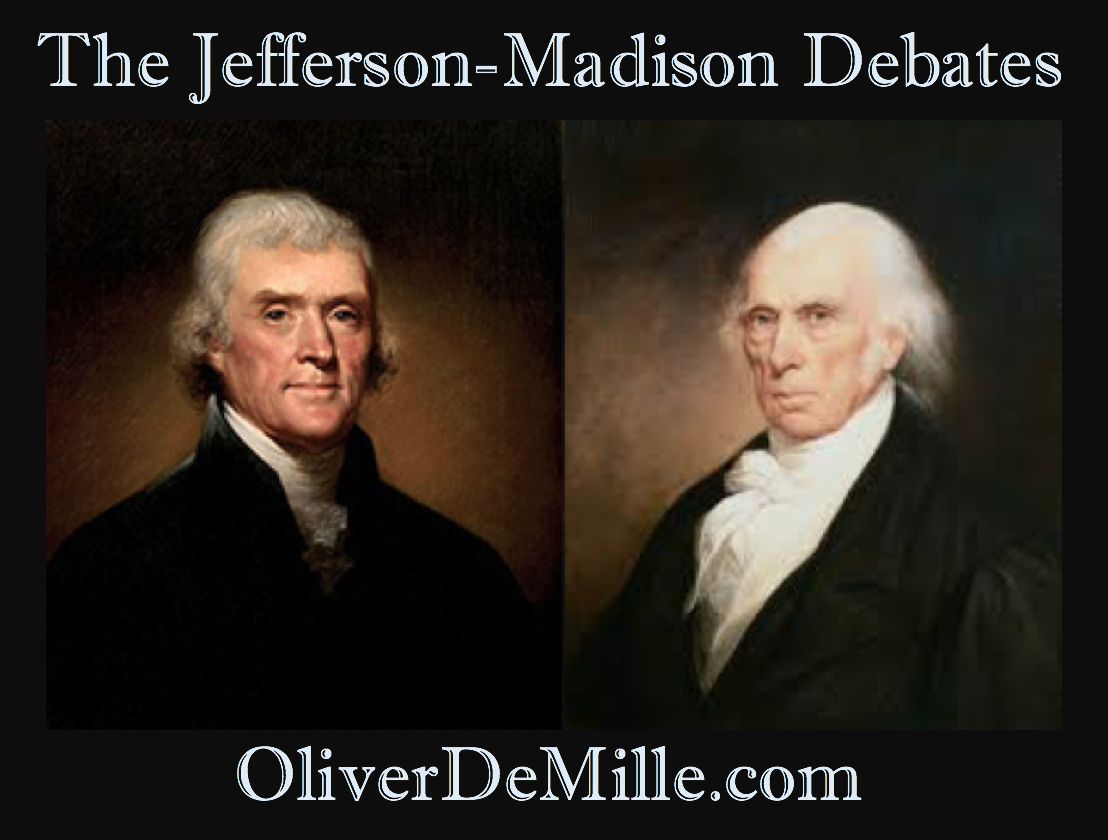 If you care about freedom, this article may be one of the most important things you ever read. If you care about the U.S. Constitution, it is definitely this important.
Some of the most significant proposals to drastically change our political system were recently outlined in several very interesting books. The first that we’ll address here is entitled It’s Time to Fight Dirty, and the stated purpose of this book is to show how Democrats can fully beat Republicans by circumventing the Constitution, or in some cases just the current political system—within the lines, of course, not by coup or overthrow.
Part I: Gaming the Constitution
To get a sense of the scale and scope of the suggestions, consider the specific proposals in question. Whether upon reflection you conclude that these are dangerous and bad ideas, or on the contrary that they are a bunch of really excellent propositions, or whatever you think of them, understanding them is vital for anyone who cares about the future of America, and freedom. Indeed, I am impressed with the author of It’s Time to Fight Dirty for thinking about the Constitution so deeply. I wish a lot more Americans did so. I believe that given the full light of day, most people will support the Constitution rather than move to some other model of government. But as long as most Americans actually know very little about it, we’re in real trouble. This allows the enemies of freedom to tear it down bit by bit while few Americans even bother to take notice.
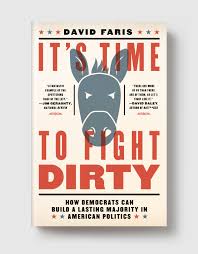 Here are some of the major proposals in It’s Time to Fight Dirty:
- “The 58 State Solution”[i]
By increasing the number of states, and carefully bringing to statehood areas that are already solidly “blue”, this suggestion quickly moves the entire nation to the Left. Then, without much effort, more states and more progressive senators can amend the Constitution at will. Leading candidates to become new blue states include the District of Columbia, Puerto Rico, and “Seven Californias”[ii], as it is described in the book (new states created by breaking California into multiple states).[iii]
Problem: In this scenario, the Constitution quickly becomes the plaything of a small group of powerful elites. They redefine it to their benefit. We would witness major alterations to our system, almost overnight, likely all in the direction of collectivist progressivism for the masses, with major exemptions and increased power for a select elite. Freedom would take major hits, and it would get worse over time.
- “The Neutron Option” or “Packing the Court”[iv]
According to It’s Time to Fight Dirty, this entails ending lifetime terms for justices and letting each president appoint 2 members to the Court. Or, as FDR attempted, wait until a Democrat is in the White House and then increase the size of the Court, with the Democratic president adding all the new justices.
Problem: Court-packing is, of course, always going to be a hyper-partisan venture, but the purpose of the third branch of government is to uphold the Constitution, not decrease its authority, or simply change it (or water it down) without Amendment. Either approach—Neutron or Packing—would almost certainly end the back-and-forth battle between conservatives and progressives, and thus disenfranchise about half the nation’s voters. The implementation of these proposals would mean Court-mandated changes to our entire system—and about half the nation’s voters would be permanently out of government power in all three branches–likely, forever.
- Scrap the Electoral College[v]
In this proposal, we would elect presidents by a straight national popular vote.
Problem: If the president is elected by straight national majority vote, none of the little states, or less populated states, will have much say in who rules the nation. The Framers wanted a prospective president to have to win “majorities in a majority of states”, with the impact of each state’s majority weighted by population. This is a little complex, but it keeps people living outside big cities, and in small and sparsely populated states, involved in our democracy. Without the Electoral College, most people who live outside the biggest cities and most populous states would have practically no say in electing our leaders. That’s oligarchy, not democracy. Pure national-level democracy is the reason the Framers believed that big republics can’t work; Madison argued at the Constitutional Convention that they can work, as long as we’re smart about it—like using a “majority of the majority of states” rather than a simple national majority that disenfranchises the voters in all but the most populous states.
- Move to a Parliamentary System[vi]
This means allowing the president to be elected not by a majority of the electoral votes, but rather by the highest percentage of votes (a plurality). In other words, we’d transition from two major parties to a bunch of parties, scrap the Electoral College, and—for example—the person getting 29 percent of the vote, would win—as long as no other candidate got more. So, in this theoretical example, the Democrat gets 29 percent, the Republican gets 27 percent, Democratic Socialist Party gets 12 percent, Green Party candidate gets 10 percent, Violent White Nationalist Party gets 1 percent,[vii] Violence Against Conservatives Party gets 2 percent,[viii] Silicon Techno Party gets 8 percent,[ix] Rust Belt Jobs Party gets 9 percent,[x] and several other parties get a few thousand votes each. Various parties can even combine their votes together in order to win and then divide up the spoils.
Problem: In this model we would tend to get more extreme presidents in each election, because candidates would have little or no incentive to appeal to the center of their own party, much less to the center of the whole nation in general elections. Special interest money would centralize to an even more elite few—causing increased top-down government by a small ruling class. It’s the Military-Industrial-Bureaucratic-Complex on steroids. To make this even worse, the leadership of Congress in this system would always be the very same as the White House, cancelling most of the value of checks and balances between the Executive and Legislative branches. No more Constitution—at least in reality. Gone. Fin. Over. Many freedoms would go with it.
Overall, my perspective is that most of these proposals could, arguably, destroy the Constitution in the process. It’s Time to Fight Dirty justifies this by arguing, in essence, that Republicans started it, that they began the dirty (outside the Constitution) tactics. In fact, this is partly true. The establishment wings of both major political parties have ignored or skirted the Constitution in a number of ways over the course of many decades. Even if Republicans were the only ones to ever undermine the Constitution, however, Democrats (or anyone) choosing to do this a lot more frequently and even more effectively is not good for our nation.
If you believe, as I do, that the Constitution is the best system humanity has developed so far for maintaining genuine freedom in a lasting fashion, anything that undermines it is ill-advised. While the Constitution began with the glaring flaw of allowing slavery, the system it established eventually found ways to overcome this, and a number of other ills, with a lot of pain along the way—and in the process provided more freedom and opportunity to more people than any other governmental form in recorded human history. Destroying it, especially with the short-term goal of winning partisan political battles (no matter which side you’re on) is not a good plan. If the Constitution is destroyed, or significantly weakened, I’m convinced we’ll witness a massive loss of freedom, opportunity, human dignity, prosperity, and happiness for people on all levels of the socio-economic scale in the following fifty years—not just in the United States but in many places around the world—and that it will take decades, perhaps centuries to get back to the level we now enjoy. We don’t want to go backwards; we’ve got too many problems right now that we need to solve, so we don’t want to get stuck just trying to get back to where we already are.
With this at stake, undermining the Constitution makes party agendas look shallow, even petty. I understand that many issues held dear in both parties are infused with high levels of passion in the current environment, and have been for at least the past twenty-five years (and escalating), but from the larger perspective of history they are still trivial in comparison to undercutting the U.S. Constitution. Both sides greatly benefit from its protections, year after year. And nothing I’ve seen proposed to date is anything close to better, or even as good.
It’s important to note that the author of It’s Time to Fight Dirty does outline some very good ideas, putting an end to gerrymandering, for example. It’s also true that Republicans have pushed a number of “dirty” plans, from widespread gerrymandering (realigning voting district boundaries in a way that “your” party will win more elections) to the “W” Bush administration investigating political opponents in election years (accomplishing very little in legal terms, but casting negative light on those running against them). Like twin toddlers tussling in the playroom, it’s hard to honestly say which party first started the “dirty” tactics—just look at local and state elections through U.S. history. Both parties are to blame for undermining the Constitution.
But that’s real the point: Weakening the Constitution for partisan goals is shortsighted and, ultimately, bad for America (and beyond).
Part II: Deep State Rules
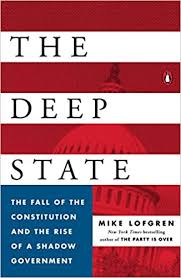 With all this said, the proposals in It’s Time to Fight Dirty aren’t actually the worst “dirty” plans to undermine the Constitution. For example, some have proposed “tanking” the economy to stop the reelection of a president they don’t like, by manipulating interest rates through the Federal Reserve or getting a consortium of wealthy banks, billionaires, and other entities with major financial clout to take steps that bring the economy down—“just until after the election” that they want to go their way. Or consider the rising power of the deep state, bureaucrats working within the government who simply use their influence and authority to push personal or partisan agendas—regardless of what the laws require. This is deep power. It also cuts against the positive goals of both major parties, and hamstrings their winning candidates—Reagan and Clinton, Obama and Trump, etc.
This should concern all voters—your power over who rules you is simply rejected and ignored. In this reality, elections matter very little. And, unlike the relatively straightforward proposals outlined above, this occurs almost entirely in secret. Even the media may take months or years to realize what’s actually going on. If the suggestions above are ill-advised, this approach is downright corrupt.
But it’s not theory. It’s already happening. The deep state threat is real, and amounts to:
- Ignoring Elections
This doesn’t mean the people ignore elections, or the media, or even our elected officials. Our freedoms are never in worse danger than when actual agents of the government, federal employees in any or all of the three branches, especially in executive agencies and courts, ignore Congress, the White House, the courts, and even the law. They make decisions, or don’t, without letting anyone else consider what is needed, and influence our lives in a thousand other little ways. Sometimes these become big issues in individual lives, but we are informed of the bureaucratic mantra: “That’s just the way it is.” This is real power. It always undermines freedom, and it frequently hurts people. It has now reached the level of pandemic, though it remains largely in the shadows. It is a serious abuse of the Constitution.
In fact, the challenge from the deep state is much bigger than most people realize. Consider the following comment by Senator Mike Lee:
“I keep two towers of documents in my Senate office. The first is only a few inches tall. A collection of all the legislation passed by Congress in [a year], it contains about eight hundred pages. The second tower, which is eleven feet tall, is a collection of regulations proposed and adopted by federal agencies in [the same year]. It contains about eighty thousand pages.
“These extraordinarily unequal towers illustrate a startling reality: The U.S. Congress no longer passes most of the federal laws, rules, and regulations that are imposed on the American people. While a mountain of those rules are decreed by an army of unelected federal bureaucrats, only about 1 percent of the rules we must live by are enacted by the most accountable branch of government—Congress.”[xi]
This dangerous reality led one author to write a chapter entitled: “Do Elections Matter?” The title of the book, written by Mike Lofgren, is The Deep State: The Fall of the Constitution and the Rise of a Shadow Government. Perhaps the most consistent theme I noticed while closely reading this book is how many congressmen, senators, and presidents from both parties are now (or have been) in numerous ways subordinate to the bureaucracy.[xii] Not officially, and not in the minds of the regular people, but actually, in real life. It is the bureaucrats who provide elected and many top appointed officials (in all three branches) with the information they use to make powerful, life-impacting decisions on many fronts, and it is usually bureaucrats (often the same ones) who implement such decisions after they are made. If the top official has questions or misgivings about the information that is provided, he/she typically turns to experts for further clarification—such experts are nearly always the same, or other, bureaucrats.
Shadow government, indeed. Unknown. Powerful. Anonymous as well, at least in any practical sense. And while many of these people have amassed decades of employment seniority, they typically face no accountability to voters. They seldom face real accountability at all.
Part III: Quantocracy[xiii]
 Another major attack on freedom and the Constitution comes from what Frank Pasquale terms, simply:
- The Black Box Society[xiv]
This consists of a number of secret algorithms, owned and utilized by various corporations and government agencies. These algorithms, and those who control them, exert significant power over people, organizations, and even governments. They interfere in our elections (all of them, at least at the national level, and many others as well), and in those of other nations. They are even more shadowy than the deep state, and many of them operate without governmental oversight—working for banks, big tech, consulting organizations, Wall Street and Silicon Valley firms, investment, finance, big data, and governmental intelligence agencies in the U.S. and abroad. Orwell’s warning is now reality: they are watching. Some for profit, others in the name of security, still others for information, influence, and/or power.
According to Pasquale, and the ample research he shares in his book The Black Box Society, algorithms and their proprietors literally “control money and information” in the current economy—not only in the United States but around the world.[xv] Pasquale wrote: “As technology advances, market pressures raise the stakes of the data game. Surveillance cameras become cheaper every year; sensors are embedded in more places. Cell phones track our movements; programs log our keystrokes…”[xvi] Devices in our homes, televisions, cars and businesses listen, watch, and record. “The resulting data—a vast amount of data…—is fed into databases and assembled into profiles of unprecedented depth and specificity. But to what ends…?”[xvii] Who controls it? And who could control it next month, next year?
Whatever the answers to these disturbing questions, many of the institutions that collect and control such information about each of us also have direct power over important parts of our lives. Do we qualify for a loan? The algorithms, and those who program them and later analyze their data, decide. Do our politics lean Left or Right, and based on this what news stories and feeds will appear when we search for information online? Will our messages sent be delivered, or “lost”, “masked”, “shadowed”? Will the things that appear when we search online support our leanings, or purposely seek to change our views? Can third parties pay for what they want us to see and read? Can they, in effect, buy us, by buying the information they want us to encounter—information tailored specifically to each of us, digitally individualized, designed to sway our specific beliefs and actions in ways that benefit the buyers? Will they guide us to the kind of news, purchases, investments or connections we want, or those that someone, somewhere, has determined would be best for us? Or for them? All of this is within the power of Black Box algorithms. Moreover, this is already the norm in many ways.
Important question: Is such power subject to any limits, checks or balances, even when it is wielded by government entities or agencies? If not, this undermines the Constitutional structure of adequate limits, checks and balances on all powers delegated to the federal government.
Obviously the Framers didn’t specifically strategize Constitutional safeguards against the government operating (or piggy-backing) algorithms to electronically data mine or apply predictive analytics toward the citizens. But their intent in this arena is clear from the Fourth Amendment language concerning protections from searches of “persons, houses, papers, and effects.” Freedom is undermined when personal or business information is being collected, stored, owned, or analyzed by government or other power organizations—whether it is called “mining”, “surveillance”, “data”, “analytics,” “metadata”, “sessionization”, “mix modelling”, “stemming”, “event processing”, or anything else. This applies to “cloud”, “cluster”, “lake”, “IoT”, “ETL”, “CEP”, “hive”, and anything else that originally belongs to or comes from one person or private group.
Dressing it up in technical jargon doesn’t make it okay for the government or any other powerful computationally-enhanced entity to just take it, or use it, no matter how fancy the math. Perhaps the United States needs to follow the example of Estonia and teach computer coding to all students in elementary schools.[xviii] If our citizens are going to rule their own nation, they need to read and understand our Constitution, and perhaps also read and understand the codes and algorithms their government and other entities can use to control the people.
“We hold these truths to be self-evident, that all men are created equal, except those who code, and especially those who hire the coders and control the coded algorithms and information: some are more equal than others…”
Part IV: The Big Twelve
Orwellian references aside, today’s American citizen is at times alarmingly unaware of the threats to freedom. Consider, for example, the following “declarations” proclaimed by Google in its early years, and still espoused by many tech industry insiders in the U.S. and abroad:
- “We claim human experience as raw material free for the taking. On the basis of this claim, we can ignore considerations of individuals’ rights, interests, awareness, or comprehension.”[xix]
- “On the basis of our claim, we assert the right to take an individual’s experience for translation into behavioral data.”[xx]
These are the first two of six such declarations. The others claim the right to own whatever data they take, and to use it however they choose.[xxi] The message is clear, albeit shocking: Someone owns us. This is not good for freedom, except the kind of elitist “freedom” (license) that does whatever it wants, whatever it can get away with. One author called these six declarations the beginning of a new “age of conquest”.[xxii] The strong conquer, rule, and label it “freedom”, “democracy”, “social democracy”, or whatever they choose to call it. This new reality, the new economy, if it succeeds, is built on the poignant question: “Are we all going to be working for a smart machine, or will we have smart people around the machine?”[xxiii] Either way, the hierarchy is top-down, with most people living as part of the “down”.
The real question is right in front of us: “Who knows? Who decides? Who decides who decides?”[xxiv] If so much information about you is legally owned by a Black Box somewhere, and those who control it, and if the owners have all the rights concerning this information, what parts of you are owned by others? And if the owners have the right to convert this information into behavioral data, to analyze it and use it to model your tendencies, to buy and sell it to others, and to directly influence your choices using this same data, how much does this impinge upon your freedom?
For example, if there are five possible paths for a baby to take when he crawls through the doorway leaving his room, but he can only actually see or hear three of these paths, is he really free to take either of the two paths that he can’t detect? This logic applies to the information we access, and all entities (governmental, corporate, and combined) that gather and utilize information about us. If there are five options we can choose from in making a life decision, big or small, and the data collected about us is used to ensure that we are only informed about three of these options, is our freedom reduced? (Some would say “stolen”, or “usurped”.) If a for-profit entity like a bank or corporation does this, what term would we use to describe this action?
What about a “for-power” organization such as a government, activist media outlet, big tech firm, activist online platform, or political consultant hired to target certain voters to make specific choices on election day? How much does such a consultant get paid for your vote? And are such payments for votes legal? What if the payments go to First-Amendment-protected media organizations that are compensated specifically to influence your vote—albeit “indirectly” by paid advertisers who are part of the side arrangement? Can votes be bought? If so, can they also be sold? What if those same media or online platform organizations receive government subsidies, contracts, or tax breaks—and the way they sort and deliver information to you, and how you vote based on the information they provide (or withhold), impacts the level of money (or resistance) they receive from the government?
“Black Box”, indeed…
We are in the “undiscovered country” of 21st Century governance, legality, morality, psychology, technology and business. Which rules are new? Which do we know about? What don’t we understand?
It is this last question that always leads to the loss of freedom—from Ancient Greece, Babylon or Egypt to medieval Italy or modern Ukraine, Egypt, Ohio, or California. Arrogantly, in the United States we tend to think we are on side of “knowledge”. But do we fluently speak R, Python, or Julia, not to mention the really cutting edge dialects of digitized power? Have we even heard of these, or know why they matter? We don’t know what we don’t know—yet we the citizens are supposed to be in charge of our nation. According to Forbes, in 2019 “Data Science is the best job in the U.S. for the last three consecutive years.”[xxv] But how many people with these jobs make the actual decisions—the big ones that steer society? Answer: none. They work for the decision makers, corporate and governmental.
How many government and corporate projects, and technologies, are now dedicated to “behavioral modification”? And do they mainly target conservatives and libertarians, or liberals and progressives? While the blue and the red argue about the issues of the day, passionately pointing fingers at each other, the quiet answer is unflinching: Both. All. Everyone.
We are at times duped by the sideshow. The nightly news broadcasts and hourly feeds keep us tied to the reality-TV shows we call political news. But the worst assaults on freedom frequently happen off-stage. Unless we know where to look, we don’t even notice. We think the news is real. It is often a lot more like clever theater. Is the answer to learn coding, to study C++, SQL, and other big data languages? Or to become a data scientist and infiltrate Silicon Valley? Is working for the “big nine” the path to leadership in our time?[xxvi] The “big nine” are Amazon, Google, Facebook, Tencent [China], Baidu [China], Alibaba [China], Microsoft, IBM and Apple. The “big twelve” are the same corporations plus the big-data arms of the U.S. government, the Chinese government, and the Russian government, and the workers and thinkers in the “big twelve” community are in some ways more closely connected than most Americans are to each other. The divisions between them, especially those based on the letterhead in their offices,[xxvii] are often much less significant than the blue/red divide in American life. The real story is happening, but often goes unnoticed.
In short, the solutions won’t likely come from within the technology institutions or culture, mainly because expertise is now a “for-hire” sport, not a “change the world” activity. Working for an employer almost always means furthering their agenda. To effect significant change, in contrast, one must engage more entrepreneurial pursuits. Enterprise remains by far the most effective vehicle of innovative leadership.
Part V: Three Steps to Kill the Constitution
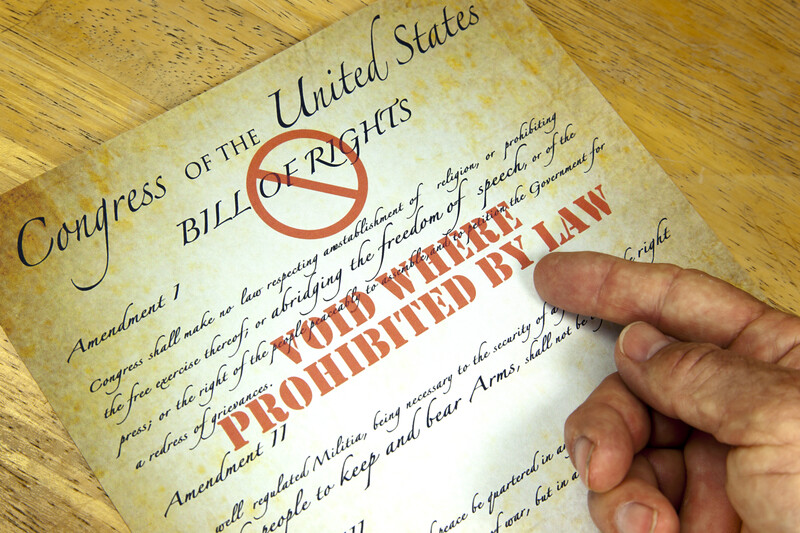 In this atmosphere, with the U.S. Constitution pulling in one direction and so many opposing forces pulling the other, how can humanity’s best chance at genuine freedom win the day? The Framers were clear from the very beginning that the Constitution’s success depended on the regular people. If they couldn’t rise to the occasion, the Constitution wouldn’t last. Benjamin Franklin put it succinctly. When asked by a citizen what kind of government the Convention had created, he replied: “A republic, if you can keep it.” He put the onus for Constitutional success on the regular people. It remains firmly in the same place today, though few people actually realize it.
In a sense, “killing” the Constitution in our day is an easy task. Get the people to forget it, ignore it, and fail to study it closely or frequently. Check! Done. Step one is accomplished.
The other two steps have proven more difficult, despite the efforts of the sharpest minds elite money can buy and the generational funding of massively endowed and funded universities, trusts, media corporations, K-Street special interest lobbyists, the great banks, and a host of storied private foundations and think tanks. The combined wit and treasure of the elite classes haven’t quite been able to pull it off.
This is all a shocking surprise, to tell the truth. How can the ignorant masses face off against the biggest and best and richest and most ruthless, and keep coming out on top—without even understanding why, and in most cases without even realizing what they’re doing? It defies logic.
The challenge resides in this little-publicized fact: the American Framers predicted the elite, multigenerational onslaught against their most important work (the U.S. Constitution), and they drummed up a little “algorithmic computational code” of their own. So far, it’s been battered, repeatedly put under siege, and even cracked a few times, but it hasn’t quite broken. Much of the “code” remains intact, and the “algorithms” have proven both resilient and, shockingly, self-healing and self-improving.
The Constitution Code
https://tjed.org/product/bbf
The Framers’ formula is, in a way, a self-protecting AI. Every American should know it and understand it. But very few do. Here’s how it works:
- Governments exert power.
- This is good when the power is used to protect the life, liberty, property, and inalienable rights of the citizens.
- It is bad when that power is used against the people, usually by elite groups (inside or outside the government) striving to increase their own power and status at the expense of the masses.
- The challenge is that no group other than the masses ever adequately protects the people’s interests and inalienable rights, yet the masses themselves tend to get distracted from doing this on their own.
- The solution to this dilemma begins with dividing the elite groups of power into separate cliques and convincing/incentivizing them to limit, check and balance each other—hopefully dissuading them from joining forces and taking away the rights of the people and simultaneously giving themselves control of the nation’s resources.
- Such a solution is complex and difficult, but can be achieved by what Jefferson called “dividing and subdividing government” in multiple ways that keep elites from combining their forces against the masses. The key is to keep the elites focused on battling each other.
- The U.S. Constitution established just such a system and result.
- It had various initial flaws, particularly slavery, but the overall structure incentivized improvements over time; many of the flaws were fixed, and the basic direction and protections grew in strength and momentum. Elites battled each other in numerous ways, but the masses unwittingly kept most of their freedoms intact. The process was painful and imperfect, but it kept improving, albeit not rapidly. Groups with fewer freedoms slowly gained more, usually without reducing the overall freedoms of the whole society. The “code” worked.
- The system contracted certain viruses as time passed. One, the old virus of class division, infiltrated the code largely by reviving political party conflict. The parties grew in power, and threatened the entire balance.
- Another virus, also an old standby of past governmental decline, came in the form of elite corruption in the halls of power. This grew over time, patiently spreading its tentacles into institutions of influence—both public and private. The two viruses learned to work together, mainly through political parties and other special interests (including academia, media, and big business).
- Both of these dangerous viruses wormed into the Framers’ code, but found themselves strangely limited. They were able to flourish, but not win. Both operated on the assumption that power, wealth, and knowledge eventually win the day, only to discover that the Framers had anticipated this and prepared accordingly. All the power, education, expertise and funding the elites could bring to bear were thwarted by the Framers’ “algorithms”—the people didn’t wither under such attacks (as expected, based on thousands of years of historical precedent), nor did they try to directly fight back (as also anticipated). Instead, they simply took note of, or even ignored, the plans of elites. This was quite unexpected, and quite unprecedented. The Framers’ “code” thrived.
- But how? How did the masses win in such circumstances? How did the “code” change things? The answers are unconventional and, as mentioned, largely unprecedented. Benefiting from the Founding model, the people exerted voting power in a strange way: regardless of the words of experts, or the powerful spin of academia and media and money, they instinctively pushed back against much of what the elites promoted. The masses seemed to have a sixth sense in these matters. If the elites wanted it, the voters pushed against it. Whatever the elites did to promote their agenda, the regular people quietly, usually without openly realizing it, sensed the pressure and voted against it. Sometimes they failed to do this in a single election, and more rarely for two consecutive elections. But never for three or more. No matter the actions, plans, schemes or grand strategies of the elites, the masses instinctively voted the contrary. They did this even when political parties rose up and tried to inflame the masses to extreme reactions. Many were fooled by this powerful strategy. But when the elections came, the electorate pushed back against the wishes of the elites. Not logically, but emotionally. And, again, they did this quietly, in most cases without fanfare. Elites often didn’t actually know what was coming until election night. This happened numerous times in modern day. In the recorded annals of history, this was new. The Framers’ code created a system where the people, the masses, experienced a new power, a new sense of when elites are pushing for something, and how strongly they are pushing, and a corresponding incentive to push back en masse.
- This pattern indeed flew in the face of three millennia of written history, but the Framers, who knew this history as well as any generation before or after, coded it into the cells, cell walls, and very syntax of the system. And it held, despite massive pressure brought against it in multiple formats and from all directions.
- It still holds today.
When the U.S. Constitution has been altered by legitimate Amendment, this Framers’ “code” has strengthened. When it has been circumvented or diluted by “dirty” tricks, weaknesses have appeared. Note that this includes both unconstitutional changes (such as Court decree rather than following the Amendment process, etc.), and also alterations that are technically not unconstitutional, but are still “dirty” because they violate the intent and design of the Framers. Again, it’s worth repeating that both major political parties are guilty of many dirty tricks of this sort.
Now, down to details:
https://tjed.org/product/2019-tjed-freedom-convention/
Step One of Killing the Constitution is to get the masses to shirk their duty to study, know, revere and masterfully apply the Constitution. As mentioned, this is a fait accompli. The enemies of the Constitution have won this part of the battle, at least for now.
Step Two is to get the masses to stop instinctively pushing back against elite agendas and proposals that in any way raise elites above the people and threaten to lessen the freedom or rights of the regular people. To date this has been repeatedly and aggressively attempted, but it hasn’t worked. Not in big ways. The Constitutional code has been weakened some, but not beaten. The Framers’ “algorithms” are working.[xxviii] Note that they work in part by pitting elites on the Left against elites on the Right, and vice versa. While these opposing camps of elites think they are battling each other, they frequently serve to warn the masses about each other—greatly influencing elections, but not in the way elites expect. Elites on both sides tend to believe that when they “expose” elites on the other side they will strengthen their own side—the reality tends more to exposing all elites. Again, this was part of the Framers’ intent, or “code”.
Step Three is to get the few on the side of the masses who deeply understand the code (Albert Jay Nock called them “the Remnant”) to give up, switch sides and join the elites, or stop passing on Remnant-level knowledge and depth to the rising generations. This has proven impossible. The enemies of the Constitution have achieved no significant victories concerning this Step. Today’s Remnant are strong—people who love freedom and understand the Constitution deeply, one could say “algorithmically”, at the level of the Framers themselves.
Conclusion
Throughout the history of free nations, there are constant attacks on freedom and the principles upon which freedom is built. This remains the rule in our world today. The U.S. Constitution, under which more genuine freedom has been experienced by more people than in any other government in recorded history, is a powerful framework for freedom, and it is the best hope for continued freedom for the masses (and also the elites) in the years and decades ahead. Attempts to undermine the Constitution are many. They appear in multiple ways, both old and new, each year, many times a year, employing a variety of sources, methods, and tactics.
This will no doubt continue as long as we are free. As such, it is a good thing, an ongoing sign that people are using their freedoms to explore many options, question what works, and seek solutions to the real problems we still face. But freedom is not guaranteed. Historically, it is quite fragile. It only lasts when the people effectively stand up for it. It disappears when the masses fail to demand it. It is always, as Ronald Reagan warned, just one generation away from extinction. If we don’t protect it, we will lose it. If we are distracted, too busy, or too lazy or ignorant to fight for it, we deserve to lose it.
As mentioned, the First Step in destroying the Constitution is already accomplished. The Third will never be achieved. It is to the Second Step that the enemies of freedom amass their energy. They wield the might and power of all the money in the world, the wit and wisdom and will of the biggest and most prestigious institutions on earth, and the force of many in government, banks, universities, media outlets, corporations, foundations, experts and armies.
Against this stands the yet unexplained habit of the American people to sniff out elite schemes and vote them down, sometimes swinging Right and other times Left in a seemingly illogical, uncanny, and incredibly potent pattern of effective choices—decade after decade. Their actions are far from perfect, and they are not coordinated, yet so far they have kept the regular people’s place above all the polish, erudition and stratagems of the world’s so-called “best and brightest”—those in financial and political power.
Still, little by little, the enemies of freedom whittle away around the edges. Over time, this reduces freedom, slowly but surely. Today this erosion is approaching a serious danger point—especially if “dirty tricks” steal away the Constitution in ways that further undermine its effectiveness. We are living in the times described by W.B. Yeats:
The best lack all conviction, while the worst
Are full of passionate intensity.
Will the American voters at some point lose their proven “sixth” sense of quietly rebuffing elite agendas? If so, will this happen soon? Or, more specifically, will those who hate our Constitutional freedoms find ways to destroy the system that endows the regular people this power? The pressure to do so continues to build.
(For more on this topic, including effective solutions, read Oliver DeMille’s book Freedom Shift: 3 Choices to Reclaim America’s Destiny>> )
*Books Reviewed:
- It’s Time to Fight Dirty: How Democrats Can Build a Lasting Majority in American Politics, David Faris, 2018/2019, Brooklyn, New York and London: Melville House
- The Black Box Society: The Secret Algorithms that Control Money and Information, Frank Pasquale, 2015, Cambridge, Massachusetts: Harvard University Press
- The Deep State: The Fall of the Constitution and the Rise of a Shadow Government, Mike Lofgren, 2016, New York: Penguin Random House
NOTES
[i] David Faris, 2018, It’s Time to Fight Dirty: How Democrats Can Build a Lasting Majority in American Politics
[ii] Ibid.
[iii] Ibid.
[iv] Ibid.
[v] Ibid.
[vi] Op. Cit., Faris
[vii] No such party actually exists, at least not as such; hopefully, of course, nothing of the sort ever will, or get anything near 1% support in the electorate.
[viii] Ibid.
[ix] Ibid.
[x] Ibid.
[xi] Mike Lee, 2015, Our Lost Constitution: The Willful Subversion of America’s Founding Document
[xii] Mike Lofgren, 2016, The Deep State: The Fall of the Constitution and the Rise of a Shadow Government
[xiii] Quantocracy: Government Rule by Algorithms and Quants
[xiv] Frank Pasquale, 2015, The Black Box Society: The Secret Algorithms That Control Money and Information
[xv] Ibid.
[xvi] Ibid.
[xvii] Ibid.
[xviii] Questions: Does Estonia still do this in 2019? Have any other nations followed suit?
[xix] Cited in Shoshana Zuboff, 2019, The Age of Surveillance: The Fight for a Human Future at the New Frontier of Power
[xx] Ibid.
[xxi] See ibid.
[xxii] Ibid.
[xxiii] Ibid.
[xxiv] Ibid.
[xxv] Cited in bigdata-madesimple.com
[xxvi] Amy Webb, 2019, The Big Nine: How the Tech Titans and Their Thinking Machines Could Warp Humanity
[xxvii] Anachronistic? Probably.
[xxviii] The American Founding era phrase for what we might term a sort of political “algorithm” was “auxiliary precautions”.
Category : Aristocracy &Blog &Book Reviews &Business &Citizenship &Community &Constitution &Culture &Current Events &Economics &Education &Entrepreneurship &Featured &Foreign Affairs &Generations &Government &History &Independents &Information Age &Leadership &Liberty &Mission &Politics &Producers &Statesmanship &Technology