The Best Books of 2022
January 2nd, 2023 // 5:16 am @ Sara DeMille
JUST IN TIME TO READ THEM IN 2023!
An Invitation
 Great reads are, well…great. They move you. Or change you. Or invite you to face challenging realities, or approach the future in better, more effective ways. They empower you, or help you do other equally important things.
A great read is a life-changing event. As Thomas Jefferson wrote to John Adams in the summer of 1815:
“I cannot live without books.”
And to Abigail Adams he penned the famous words:
“…my greatest of all amusements, reading.”
To James Madison he added a longer view:
“Books constitute capital. A library book lasts as long as a house, for hundreds of years. It is not then an article of mere consumption but fairly of capital.”
To founding leader Richard Rush he put it bluntly:
“Books are indeed with me a necessary of life.”
Ironically, to write out everything Thomas Jefferson wrote down about books and reading would require a very long book.
In trying to emulate his passion for books, along with the pondering and deep consideration that naturally occurs when you read almost constantly, I habitually take a few moments at the end of each year and look over the list of the books I’ve read in the last 12 months. And, invariably I find myself listing and ranking the best ones—and debating which is the #1 vs. #2 vs. #3 TOP book of the year. I seldom do this with fiction books, though I read a lot of them. In fact, Jefferson did too. He wrote:
“Some of the most agreeable moments of my life have been spent in reading works of imagination [fiction, literature] which have this advantage over history [non-fiction]: that the incidents of the former may be dressed in the most interesting form, while those of the latter must be confined to fact. They cannot therefore present virtue in the best [or] vice in the worst forms possible, as the former may.”
The List
So, every year I write a list of the top non-fiction books I’ve read. This year was no different. Here are my Top 7 Non-Fiction Reads of 2022, in order, starting with the best, TOP BOOK #1 and down the list. Most lists like this ramp up to the very best book and present it last, but I tried that and just didn’t like it.
I’m shooting straight here, top 7 best books in order:
- The Psychology of Totalitarianism, by Mattias Desmet. This book tackles the biggest challenge we face in our modern world right now. It’s a must read for anyone who cares about freedom. And the challenges it outlines are mostly still ahead—so read up! It’s vital prep for what’s coming… I’ll be addressing it in several classes and events coming in 2023! And so will Ian. So excited…
- The 90-Degree Turn, by JB Fred Eberlain. This is a great, great read—I wish every American would read this and think about it seriously. It addresses what I think is the second biggest challenge faced by America and other free nations right now. Also, when you get to the section on Solutions in this book, compare his proposals to those outlined by Orrin Woodward and myself in our book LeaderShift—together the combined list of solutions is really powerful.
- The Right and Wrong of Compulsion by the State, by Auberon Herbert. All right, I’ll admit that this book has a boring-sounding title, except maybe to history/political nerds like me. And the author’s name, Auberon, doesn’t help—especially with the surname “Herbert” attached. It just feels stuffy all around. But look past that! Because this is one of the best books you’ll ever read in your life. It’s very short, only about 30 pages (or a few more if you find it in small booklet form). And this is the best book on the basic meaning of freedom you’ll ever see. It’s better than The Law by Bastiat, and anyone who cares about freedom simply must read this book. It’s brilliant.
- Discourses on Davila, by John Adams. Maybe the best book I read during 2022, even though I’ve read it a dozen or more times before. It’s a life-changer, if you take the time to really learn from it. It may be the most important book you read this decade, and the best book out there about our times, our era in history—even though John Adams wrote it over two hundred years ago. (By the way, you can get it for $30-$50 as a separate title, or you can save money and buy it for around $12 as part of The Works of John Adams, Volume 6, easy to find on Amazon.)
- The Righteous Mind, by Jonathan Haidt. This book was written in 2013, but I didn’t read it until 2022 when my son Oliver found it and sent me a passionate recommendation. It’s deep, and incredibly timely. Fabulous read. It will forever change the way you see modern politics. It brings a whole new understanding of things, like the first time you read The Fourth Turning by Strauss & Howe.
- 100 Games to Play with a Stick, by author unknown, published by DSS Games. I wish I would have known about this book during the Covid-19 lockdowns, because I would have recommended it to everyone I know. But it’s not too late. It’s fun, it’s funny, and on top of that, it’s hilarious. It’s a book for our time, in a profound way. You have to read it, and really think about it, to get how important it is. Truth: It heals what ails you…
- Resilient, by John Eldredge. This book takes a decidedly Christian and religious tone, which you may or may not like, but it’s a great read regardless of your religious/political views. What a poignant message. The author assumes that everyone right now is experiencing some real post-Covid-PTSD-type symptoms, and the book is meant to heal. It’s extremely effective; even where I disagreed with some things in the book, I still found myself feeling warm, healing, relaxed. Stress I didn’t even realize I was carrying just melted away as I read. It works. Read it, and share it. We need it.
Great News
Concerning the topic of books as the best media, Jefferson wrote in a letter to John Norville in 1807:
“…the man who never looks into a newspaper is better informed than he who reads them; inasmuch as he who knows nothing is nearer to truth than he whose mind is filled with falsehoods & errors.”
With modern media the way it is, I just couldn’t resist including this quote. And here’s how Jefferson put it elsewhere, with less sarcasm, pointing out the importance of books:
“I have given up newspapers in exchange for Tacitus and Thucydides…and I find myself much the happier.”
He considered great books better media than other kinds of news, and he also considered great books a better source of education than formal lectures and other systems of schooling that don’t center around the best books. His wisdom is still relevant today, perhaps more than ever.
Note, by the way, that the main theme of Tacitus was the loss of political freedoms and personal liberty that led to the decline and fall of the Roman Republic and the takeover of the Empire, and how it all happened; Thucydides’ main contribution was a study of how Athens lost its freedoms and went from the Greek Golden Age standing as a beacon of freedom to a fallen people enslaved by the Spartan Empire and its totalitarian socialist government.
Bread and Circuses
Both peoples, the Greeks and later the Romans, lost their freedoms and prosperity in a very short period of time, and hardly any of them realized what was happening, or how it was occurring, until it was too late. Jefferson hoped Americans would learn from this and not repeat it, starting by turning to the great books for news and education, rather than the bureaucratic media and bureaucratic schools of the day.
Talk about real news. Actual wisdom. If only such books were still available to us today. But with so many shows and movies to watch on streaming platforms, not to mention so many loud and angry news shows each evening, who has the time? As for education, such books get in the way of this week’s career-prep/college-major assignments and so many interesting posts on the smartphone. Oh well… Freedom will have to wait. It’s a generational disease: generations born to freedom and prosperity are notoriously distracted by career (bread) and entertainment (circuses). In fact, they’re more than distracted—they’re convinced they are entitled to these things, and they expect them to be provided easily and without sacrifice or effort. Writers like Tacitus and Thucydides address this situation, its results, and what to do, but…
Who reads that stuff?
As for the seven Top Books of the Year listed above, agree or disagree with some of the details in each, but they are all worth reading! I wouldn’t skip any of them. They are Tacitus and Thucydides for our time, especially #s 1-4.
Enjoy…
Want more up-to-the-minute commentary by Oliver DeMille?
Join TJEd Depth for your continuing education, and get access to the Oliver DeMille LibertyCast on Advanced Current Events and even get day-in-day-out access to mentoring and discussion on a live discussion forum with Oliver and a select few participants!
Visit TJEd.org/TJD for more details >>
Category : Blog &Book Reviews &Citizenship &Culture &Current Events &Education &Featured &Government &History &Information Age &Leadership &Liberty &Politics &Statesmanship
The 2020 TJEd Online Convention is getting Rave Reviews!
April 6th, 2020 // 1:13 pm @ Oliver DeMille
Here’s what people are saying!
 I want to thank you for the 2020 Online Freedom Convention. Oliver’s optimistic view of the crisis and what we can do now is such a balm for my panic-ridden, anxious soul. Knowing that these things have happened before, that they happen cyclically, and knowing not only what to expect, but what we can do about it brings such peace and a feeling of empowerment.
Many thanks to your whole family for all you do!
~ Jennifer Halverson
Watch the video trailer!
 Listened to these talks in the convention today…I am speechless! I had chills the whole time I was listening! I’m excited to go back and do the planning section. Amazing how my perspective has changed so quickly. Going to have my husband listen, too. Thank you so much for this amazing resource!!!
UPDATE: I just now worked through part of the matrix exercise. Wow, how powerful!
~ Rachael Breneman
 I just want to say thank you to you both. You have sacrificed so much for your mission and so many of us and our children have been blessed because of your sacrifice! I listened to The Crisis is Here part 2 from the 2020 Freedom convention today. On top of the wonderful exercise Oliver led and the incredible insight, I was also struck with how grateful I am that I have been so prepared for this moment.
It is thanks in a large part to being mentored through TJEd that I have the family culture, understanding of turnings and history, life centered at home, classics on our shelves that teach us human nature, an appreciation for seasons and cycles and the confidence and ability to teach my family. While these times are uncertain, I don’t feel afraid or overly anxious. I’m actually looking forward to the next few decades and what “spring” will bring. I’m excited for my children and I to be a part of it!
~ Amy Updike
 Before any of us realized what happened, the world changed, and it is very likely that for better or worse, nothing will be the same again.
Now what?
I have learned a great deal from Oliver DeMille. The talks he has given already in this convention have really changed the way I am looking at what is happening right now, and he is just getting started.
If you want to know what to do to adapt to our new reality, I’d recommend signing up for this convention!
~ Colby Lyons
 Oliver and Rachel, THANK YOU so much for this year’s convention! We just listened to the 2nd workshop and are so excited for this time in history!
We’ve handled the crisis well because of our faith but this really got us pumped for our future!
My daughter, who is a senior, has struggled a little because she felt so uncertain of her immediate future.
Now, she’s happy and at peace that she is already on the right path to get through this crisis well. She loved the workshops so far! Can’t wait for the rest!
~ Kellee Clark
Watch the video trailer!

Join us for the 2020 Freedom Convention Here!
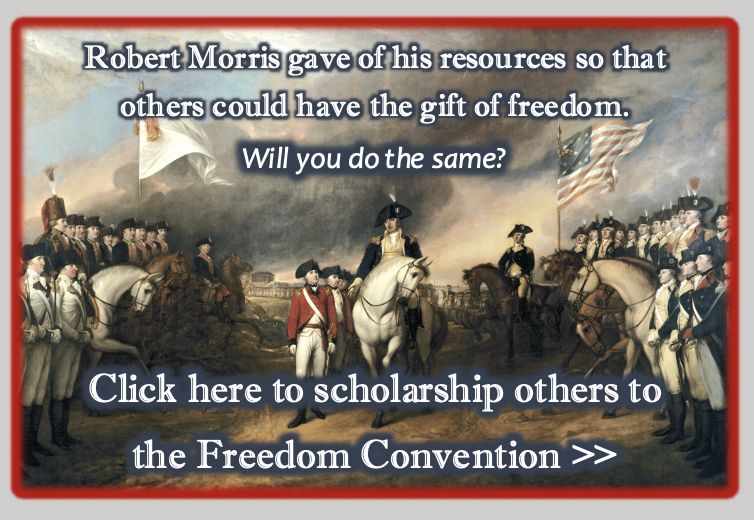
Special thanks to Lyle Mast of OR Sports for his contribution of 100 family scholarships!
And TJEd is matching that sponsorship to cover an additional 100 families!
If you need this assistance in order to participate in the convention, PLEASE don’t hesitate to request it; that’s exactly what it’s for, and we don’t want you to miss out!
Just click here to inquire and we’ll get you taken care of.
Category : Aristocracy &Blog &Business &Citizenship &Constitution &Culture &Current Events &Economics &Education &Entrepreneurship &event &Family &Featured &Generations &Government &History &Independents &Information Age &Leadership &Liberty &Mini-Factories &Mission &Politics &Producers &Prosperity &Statesmanship &Tribes
NEWS OF THE DAY by Oliver DeMille: Lessons from Crisis
April 6th, 2020 // 5:19 am @ Oliver DeMille
Lessons from Crisis
 The popular saying that “we shouldn’t let a good crisis go to waste” applies to the regular people and citizens, not just to politicians. In fact, politicians often use such thinking to make things worse.
But the regular people can do a lot of good during times of crises. In fact, they usually do.
Right now is no exception. There are a lot more people helping and serving others during this crisis than the media ever mentions. That’s a testament to good people. In addition, many people are doing another very interesting thing during this crisis, one that may last and impact our society for good long after the crisis passes. Specifically, people are realizing that the large majority of the news media isn’t handling crises very well–going as far as frequently omitting truth in reporting, and at times skewing or spinning the truth instead of just sharing the facts and trusting listeners to use their own brains.
The media has done this for a long time, but during crisis a lot more people are catching on–realizing that the media is frequently less than direct and truthful. It can be a benefit for our society, if people realize the media isn’t as truthful as the majority once believed. Gallup conducted a national U.S. poll in the last week of March 2020, and they asked people around the nation the following question:
“Do you approve or disapprove of the way each of the following is handling the response to the coronavirus in the U.S.?”
Americans ranked the media dead last of all the institutions listed. The approval rating for the news media was only 44 percent, while 55 percent disapproved. Compare this to 88 percent approval for hospitals, 83 percent for schools and daycare, 82 percent for “your state” and the same for “your employer”. Even political officials received higher-than-usual marks, with president Trump at 60 percent approval and Congress at 59 percent. The news media was the only institution that Americans rated underwater–with many more disapproving than approving.
Hopefully the crisis can have at least two silver linings concerning the future of media:
1) the media will get its act together and stop substituting agenda-driven spin for real journalism, and
2) the American people will remember to treat media reports with skepticism–and do their own research on the news that is important to them.
I’m not holding my breath for #1, but I think the crisis will likely convince a lot more people to wisely apply #2. Lessons learned in crisis can help us do better in the future.
Category : Blog &Business &Citizenship &Community &Culture &Current Events &Economics &Featured &Generations &Government &History &Independents &Information Age &Leadership &Politics &Service &Statesmanship &Technology
News of the Day: The Biggest Problem with Our Modern Politics
October 29th, 2019 // 2:20 pm @ Oliver DeMille
(and How to Fix It)
 I just finished studying a fascinating book that really made me think: Passions & Politics by two European scholars, Paul Ginsborg and Sergio Labate. I found this a difficult book to read (dry and meandering), but it shares five very important ideas that deeply apply to all of us right now:
1. In modern politics, we are taught the importance of our political party winning elections, but not the duties and responsibilities we each have as citizens.
Concerning our duties, we are typically only taught the bare minimum: voting and jury duty. The rest is usually unspoken, and mostly ignored. Specifically, the great duties the American Founders gave to the citizens were twofold: (A) To keep a close eye on government, make sure it doesn’t step out of line (violate the constitution in any way, or exert any power not directly given by the constitution), and (B) think about what kind of nation and society we want to be, and spread this vision to everyone else. These are the two great duties of every citizen in a free nation. Yet today they are both largely forgotten.
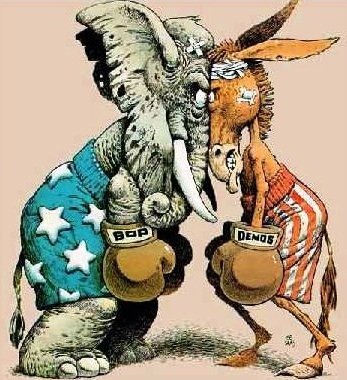
2. The political debate today is mostly about the choice between two candidates, or two parties. It is hardly ever about what kind of society or nation we want to have. As a result, most political discussion now is dogma, not wisdom.
We seldom even think about wisdom when politics comes up. Almost everyone is a dogmatic partisan now, not a wise citizen. Passions & Politics points out that our partisan emotions usually push us toward angry utopian daydreams or blunt, angry “isms”, and both tend to be a bit shallow.
3. “…for decades the political parties were ‘modern princes’, today they are no longer up to the task.”*
If our political parties run our nation (and they do), but they aren’t “up to the task” anymore, we are in a bad situation. Something has to change. Either the parties need to come together, get their act together, and create a whole new way of working with each other, or we need a new system not mired in party hatred and party conflicts. Both of these alternatives seem unlikely, unless something drastic occurs.
4. Our politics are now stuck in, “Resentment, competition, a blind conviction that the only way to build a community is to build up some enemy to serve as the target of hate.”
This is true for both sides, the left and the right. Parties now typically spend more effort and time trying to tear down the other side than working toward any great and important goals for our nation and society. Like a very bad divorce, the full focus is on bringing each other down, not helping anyone or improving the nation in any serious way. This can only lead us in one direction—down. No matter who the voters elect, this war between the parties keeps hurting our nation, distracting our leaders and officials from their real work for the people.
5. What our politics need right now is mostly calm, useful wisdom, but we seldom listen to this voice in the modern environment of fearful, angry politics.
Our politics have become almost entirely about “our side winning”, in order to avoid the terrible results of losing to the despised “other side”. The biggest problem is that this fear is quite real. The “other” side will do things that drastically hurt us. For example, whatever side you take, the other side wants to use power to aggressively attack your wishes concerning abortion, family values and family rights, taxes, the environment, religious beliefs, guns, what our children are taught in the schools, immigration, health care, crime, jobs, and many other divided issues. It’s hard to be calm, or focus on wisdom, when the next election could mean a major loss of the freedoms you care about most. Both sides feel this way. And in the current system, both sides need to feel this way—because it’s generally true.
While Passions & Politics doesn’t outline any clear solutions, it does a good job of summarizing these serious problems of our time. To get real solutions, we’re going to have to think outside of the partisan box.
Solution: To begin with, at least a few citizens are going to have to step beyond the partisan wars and think wisely. Yes, the dangers of “the other side” will be screaming loudly in our ears every step of the way. But we need to do this anyway. We need to push partisanship aside a bit and focus on wisdom.
Both are necessary (winning the next election, and doing some serious thinking from a place of wisdom), but right now there are plenty of people engaged in the party battles. Hardly anyone is working on truly wise solutions to the current system.
Specifically, we’re never going to actually fix this overarching problem with our politics as long as we live under a system dominated by political partisanship. History is clear: party conflicts slowly get worse and worse over time, until they eventually escalate the infighting and destroy freedom. The American Founders didn’t like parties for this very reason; in Federalist 10, for example, Madison called parties the major roadblock to a free society. The Framers specifically didn’t write parties into the Constitution, and hoped this choice would get rid of them. It didn’t quite work, as we all know. Political parties are extremely tenacious.
But there is a solution. A real one. It’s not fast, but it works. The one proven way to reduce the power of parties is education—not the kind found in most schools (because political parties find too many ways to influence public education), but rather the kind of learning found in the home. Parents can drastically decrease the power of partisan influence on future voters, if they know this is needed.
Guess what?
It. Is. Needed.
Right now more than ever before in American history.
Parents have the power to solve this problem.
That’s the long-term solution.
We also need some more immediate solutions, things that will at least slow down the national decline caused by party extremism until the long-term solutions can make a difference. But whatever short-term solutions we come up with, they will all fail unless parents take on this vital project.
Please take action.
And please share this message far and wide.
To subscribe to News of the Day, click here >>
*All quotes in this review, and the 5 items listed and enumerated, are from Passions & Politics
Category : Aristocracy &Blog &Book Reviews &Citizenship &Community &Constitution &Culture &Current Events &Education &Family &Featured &Generations &Government &History &Independents &Information Age &Leadership &Liberty &Mini-Factories &Mission &Politics
News of the Day by Oliver DeMille
October 10th, 2019 // 6:30 am @ Oliver DeMille
It’s Getting Extreme Out There!
October 2019:
 The news is tumultuous these days. Growing threats of impeachment, allegations that the leading presidential candidate broke the law in the Ukraine and China for family gain, the current president accused of numerous mistakes, partisans pointing angry fingers at each other, gaggles of “experts” assuring us that one side or the other is all wrong, wars and rumors of wars. It never seems to let up. Each newscast, day after day, brings the “Breaking News”, which amounts to the latet and worsening allegations, “gotcha” politics, and promises of more to come.
But we shouldn’t be worried about this. Seriously. The news media today isn’t nearly as extreme as it was in the 1830s with its battles between Andrew Jackson and the National Bank. That was a time of major division, anger, and a lot of violence. The 1850s news media was even worse. And the media climate in the Boss Tweed period (1870s), the height of the Muckraker era (1905-1925), and the counter-culture wars of the 1960s were far more divided than anything we now experience. Today’s media extremes aren’t even as tumultuous or noisy as the Jefferson vs. Hamilton conflicts, which were immediately followed by the Jefferson vs. Adams battles. Yes, today’s news is intense, partisan, and adversarial—but nothing as bad as these other times in American history.
We do tend to feel more upset by media extremism today than in the past, partly because television and other audio-visual media are more emotionally engaging than reading things in hard print, but mainly because during the relatively peaceful era between 1970 and 2014 most Americans came to believe in, and trust, the stated ideals of “modern objective journalism”. We bought into media and government as credible sources of true information. In 1973, for example, 42% of Americans had high confidence in Congress (today it’s 11%), and 46% had high confidence in television news (today it’s only 18%). But the era of objective journalism is now largely past, replaced by a return to the kind of turbulent, extremist, and intemperate news media that has been the norm in most free nations through history.
Scientist Carl Sagan described this when he wrote: “The dumbing down of American is most evident in the slow decay of substantive content in the enormously influential media, the 30 second sound bites [now down to 10 seconds or less]…but especially a kind of celebration of ignorance.”Jim Morrison warned: “Whoever controls the media, controls the mind.”
But it turns out that Morrison was wrong on this point. The reality is that in most eras of media peace and quiet politics, freedom quickly declines. When the people are actively battling for their freedoms, politics is full of turmoil and political parties threaten each other with allegations, exaggerations, lies, and name-calling. In a free society, the masses want their government to be peaceful, quietly handling business, and their media professional, trusted, and smilingly civil. But in such times, freedom tends to be attacked and reduced behind the scenes.
In response, the people take notice, and (hopefully) push back—when they do, the politics and media heat up. Historical truth: If there isn’t commotion in politics, the people are losing ground. To get back their freedoms, and their control over the well-funded plans and agendas of elites, turbulence and uproar are needed. Madison told us that the American system was purposely designed so that such uproars would focus on elections, not violent revolutions. Good news: it’s working.
Part of this is easy to keep track of. When the media is polished, quiet, seemingly objective, and widely trusted, the people usually let politicians increase power (and decrease freedoms). In turbulent times like ours, the people see the media for what it is—mostly a propaganda arm of elite power. When the people don’t trust the media, freedom is in better shape than when the people just believe the news. Freedom thrives when the people don’t trust media, or politicians. When they keep a close eye on everything done by government, corporations, media, and elites. Such times are naturally more noisy, chaotic, and confusing. Which is precisely the reason the people pay attention. We are living right now in just such a time. Consider the approval rating* of the following major American institutions right now:
Very High
None
High
The Military 73%
Small Business 68%
Medium
Police 53%
The Presidency 38%
Supreme Court: 38%
The Medical System 36%
Organized Religion/Church 36%
Low
Banks 30%
Public Schools 29%
Very Low
Big Business 23%
Newspapers 23%
Television News 18%
Congress 11%
The fact that the nightly news and Congress suffer such low confidence from the American people tells us that we’re in a better place than most people think. Specifically: The people are watching, and they aren’t buying what Congress and the media are promoting. They just don’t trust these institutions. Only 18% and 11% confidence? Seriously? Of course, guess who tells us the opposite? The media. They’re trying to justify their jobs, and they’re not winning this debate. In fact, it’s getting worse for them the louder and more extreme they become. American confidence in the news media was 24% in 2016, 20% in 2017, and now down to 18%. If they keep this up, they could soon be as unpopular as Congress.
In short, if the nightly news is full of partisan conflict, it means a lot of people are fighting for our freedoms. That’s good news. So smile at the noisy media, and study a little deeper. That’s what good citizens do in times of turmoil. Of course, this doesn’t mean that current events in Washington aren’t important. They are. In fact, they are so important that wise Americans shouldn’t let themselves get distracted by media exaggerations or political in-fighting. Real challenges to our freedom are occurring, but much of what happens is different than the news reports. We all need to stay vigilant—keeping an eye on what’s really going on. When the media is loud and extreme, it’s usually hiding something, so pay attention and dig deeper than the news. And remember: if the media ever turns peaceful, quiet, not much commotion—that’s the time to be even more concerned.
*Source: Gallup
Category : Aristocracy &Blog &Business &Citizenship &Community &Culture &Current Events &Economics &Education &Entrepreneurship &Featured &Foreign Affairs &Generations &Government &History &Independents &Information Age &Leadership &Liberty &Politics